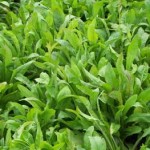
Cultivation Methods of Aloe Vera

 aloe-vera


Family: Liliaceae

Indian Name: Ghritkumari

Pakistan Name: Quargandal

Parts used

Aloe is obtained by cutting the leaves at their base and letting yellow, bitter Juice drain out. The water is evaporated off from the juice by heating and that result to light to dark brown mass.

Uses

Fresh aloe gel obtained has the property of reliving sun burn as well as promoting the wound healing. The extract of Aloe Vera is also used as sun screen.

Soil

Aloe is a hardly plant like cactus growing on a variety of soils. It grows well with pH of upto 8.5. However water logged conditions does not suit its cultivation. It grows well in drain soil.

Aloe is usually cultivated in India between March and June. It is found growing in warm, humid or dry climate with even 150-220 cm of yearly rain fall during the growing period. In very dry region the crop should be provided with irrigation.

Land Preparation & Planting

In India it’s cultivated throughout all places. Land should be ploughed twice and the field should be cleaned thoroughly for weeds.

The plants are planted at a spacing of 2ft*1ft. Rhizome cutting are planted in such a way that two third portion of the root cutting should be under the ground. Soon after planting, the land should be irrigated. 4 to 5 irrigations per year are sufficient. The plants are harvested eight month after planting.

Pests and Diseases

Diseases caused by

  1. Altaranaria Alternata
  2. Fusarium Solani


                Aloe Vera is used as a home remedy in India. It is used as a hair dye by dissolving in spirit. It stimulates hair growth. Pulp with honey or saltpetere and turmeric is given as a remedy for cough and cold.

Leave a Comment

Cultivation Methods of Withania Somnifera


English Name Winter cherry
Assamese Name Ashwagandha
Hindi Name Punr, Chiropotan
Kannada Name Kanchuki
Malayalam Name Amukkuram
Marathi Name Ghoda, Tilli
Telugu Name Vajigandha, Pannirugada
Gujarati Name Ghodaasun
Tamil Name Akavu, Allivatli
Tibetian Name Ba-dzi-ga-ndha

                                                              withania_somnifera_Ashwagandha  

Withania somnifera, also known as Ashwagandha, Indian ginseng. Withania Somnifera belongs to the family of Solanaceae (Potato family). This plant is an erect herbaceous, evergreen shrub of 13 to 150 cm (4 to 5 ft). The stems are covered with whitish colour, stellate hairs. The leaves are ovate entire, thin. The flowers ate bisexual garnish or cured yellow, axillary in clusters of about 25 forming cymes, sessile.

Soil

The crop can be grown on a variety of soil but, it grows in sandy loom or literate soil with good organic matter and drainage. If the soil is loose it will be easily to dig the root out without damaging them. pH range of 7.5 to 8 is ideal for Withania Somnifera cultivation.

Climate

Withania Somnifera prefers a subtropical climate. It is planted during the late rainy season and prefers dry weather for its successful growth.

Cultivation of Withania Somnifera

The seeds can be sown directly into the field.

Direct Sowing

After receiving one or two showers, the field is prepared, divided into plots and seeds are sown during the second week of July. The seed at the rate 5kg per acre is required for this method of planting.

Nursery Rising

About 2kg of seeds are required for 1 acre. To avoid diseases; the seeds are treated with Dithane M-45 at the rate of 3gm per kg of seed before sowing. The seeds in nursery beds are sown in lines spaced at 5cm and covered with light soil or sand. Its starts to germinate within 7 to 8 days. When the seedling grows to a height of 60cm that is in 6 weeks time, they are transplanted in row of the main field.

Withania Somnifera crop does not require heavy doses of manure and fertilizers. Hand weeding should be done at intervals of 30 days to control the weeds.

Diseases

Seedling blight, leaf blight are the common diseases effecting the Withania Somnifera. The crop should be sprayed with Dithane M-45 at the rate of 3gm per litre, when the crop is 30 days old. The spraying should be repeated at the interval of 7 to 10 days if the disease is not controlled.

Harvesting

After 8 months of planting the maturity of the crop is judged by the drying out of leaves and berries turning red. The whole plants are uprooted and the roots are separated from the aerial part by cutting the stem 1-2 cm above the crown. They are then transversely cut into small pieces of 7 to 10 cm for drying. The berries are plucked from the dried plant and are threshed to obtain the seeds.

Action & Uses

Withania Somnifera is a tonic, alterative aphrodisiace and nervine sedative. Seeds contain poisonous properties. Root is also diuretic and aphrodisiac.

Ashwagandha is used for white leprosy, cough, asthma, uterive. Diseased root is used in application in obstinate ulcers and rheumatic swelling. Withania Somnifera is used as a nutrient and health restorative to pregnant and old people. A decoction of the root is recommended or its powder with milk may be taken.

Leave a Comment

Cultivation Methods of Abelmoschus Moschatus


     Abelmoschus_Moschatus                                                                          


                    Abelmoschus Moschatus is an annual growing plant in many hotter parts of the world. The seeds root and leaves are having different uses. The seeds contain fixed oil a solid crystalline matter and resin. Fixed oil is greenish yellow fluid which solidifies on contact with air.


           Land is prepared by ploughing and leveling. Decomposition is applied and mixed well. Ridges and furrows are opened keeping a spacing of 60cm. Treat the seeds with “captain” at the rate of 6gm per Kg of seeds. Seeds are soaked in water for 24hrs and 2 seeds are sown one – one side of ridges at a depth of 1cm covered with soil. The field is irrigated soon after sowing. After 6 to 12 days of germination, nitrogen is applied in furrows about 10cm away from the plants.

Irrigation

During the first stage the field is irrigated at 2-5 days interval and later stage once in a week depending on the weather conditions. The field is kept free from weeds and regular weeding is required during the growing period.

Harvesting

The crops start to flower after 80 days of sowing. The female flowers set fruits in nearly three to four days and the pods take nearly a month to mature. When the fruits turns dark colour and white opening at angles of the ridges of the pod. Otherwise they split and seed fall off and go waste. So regular harvesting should be done. The average yield is of 300kg per Acre.

Uses of Abelmoschus Moschatus

Seed are stimulant, carminative, cooling, diuretic, demulcent, antispasmodic and ionic. Abelmoschus Moschatus seeds are useful in nervous disability, hysteria and other nervous disorders. Seeds are used for perfuming medicinal oils and in much demand in perfumery, cosmetic and agarbatti industries; Abelmoschus Moschatus is used as a drink in fever, gonorrhea , inhalation in hoarseness and dryness of the throat. Powdered seed steeped in alcohol are applied to the bites of serpents. Seeds rubbed to a paste with milk is used to cure itch. Leaves of the plants are recommended in gonorrhea and venereal diseases.

Leave a Comment

Propagation Method of Psoralea Corylifolia

 
Psoralea_Corylifolia_Babchi_Seeds


Family Name: Papilionaceae
English Name: Babchi Seeds
Hindi name: Babchi, Bhacaj
Bengali: Latakasturi Bavachi
Telugu Name: Bavanchalu
Tamil Name: Karpokarish


                                   Psoralea Corylifolia is a common herbaceous weed is found in Bengal, Maharashtra and all over the plains of India. Seeds which have an agreeable aromatic order and pungent smell. Psoralea Corylifolia is propagated through seeds. Seeds should be treated with one percent of sulfuric acid for 1 hour, and then the seeds should be repeatedly washed in water before the seed is sown. The land should be ploughed throughout before the onset of monsoon. The seeds are planted at a distance of 50 to 60 cm apart. The field is kept free from weeds by regular weeding. To control the insect and pest, spray the crop with 1% roger twice in a month.

The crop takes about 8 to 9 months to reach maturity. When the crop reaches at ripe stage, single seeded fruit turns brownish to black and emits a mild odour. An average yield of 1000Kg of dry seeds per acre can be obtained. For 1 acre of land 3kg of Psoralea Corylifolia seeds are required.

Uses of Psoralea Corylifolia

Psoralea Corylifolia is used in indigenous system of medicine in the treatment of Leucoderma, leprosy and Psoriasis and is also used to make perfumed oil. The drug has been considered to be so effective in the treatment of leprosy. Psoralea Seeds are given for the cure of scorpion sting, snake bite, Leucoderma and other skin diseases.

Leave a Comment

Propagation Technique of Aralia Elegantissima

Aralia Elegantissima also called Araliaceae is an evergreen ornamental shrub. It grows to 1.8 to 2.4m in height with erect stem. Aralia Elegantissima tolerates 6.0 pH to 7.5 pH. These plants are excellent for a cool shady climate and can be kept in indoors.

Propagation of Aralia Elegantissima (Araliaceae)

Seeds treated with sulphuric acid for 30 to 40 minutes are used for propagation. Use liquid manure of cow dung when the plants are kept in outdoor.

Liquid manure of Cow Dung

Take fresh cow dung approximately 100 gm. The same is put into muslin bag and tied. Muslin bag is then suspended in a bucket containing 1 litre of water and allowed to ferment for 2 to 3 days (the same should not be stored for a prolonged period more than 3 days). A dark coloured liquid results from the water soluble part of the dung. The concentrated suspension is further diluted with water to get a very light tea coloured solution. That is it. The Liquid manure of Cow dung is read for use. When using Liquid manure of Cow Dung see that the soil is wet in condition. The liquid should be poured to the pot without spilling on the foliage.

For a good growth just give a spray of 2% aqueous potassium nitrate, which stimulate healthy and vigorous growth of foliage.

For Aralia Elegantissima plants kept in Indoor

Egg shell soaked in 1 litre of water and allowed to ferment for about 10 days is recommended for Aralia plants kept in indoor. Never spill on the foliage.Contentzza - Blogging About Plants

Leave a Comment